Archives
- 2026-10
- 2026-09
- 2026-08
- 2026-07
- 2026-06
- 2026-05
- 2026-04
- 2026-03
- 2026-02
- 2026-01
- 2025-12
- 2025-11
- 2025-10
- 2025-09
- 2025-04
- 2025-03
- 2025-02
- 2025-01
- 2024-12
- 2024-11
- 2024-10
- 2024-09
- 2024-08
- 2024-07
- 2024-06
- 2024-05
- 2024-04
- 2024-03
- 2024-02
- 2024-01
- 2023-12
- 2023-11
- 2023-10
- 2023-09
- 2023-08
- 2023-07
- 2023-06
- 2023-05
- 2023-04
- 2023-03
- 2023-02
- 2023-01
- 2022-12
- 2022-11
- 2022-10
- 2022-09
- 2022-08
- 2022-07
- 2022-06
- 2022-05
- 2022-04
- 2022-03
- 2022-02
- 2022-01
-
QNZ Western blot results showed that the expressions of SOCS
2024-03-20
Western blot results showed that the expressions of SOCS1 and SOCS3 significantly increased after administration of rGas6 24h after MCAO (Fig. 7A–C p Discussion After ischemic stroke, inflammation has been shown to be an important secondary injury mediator in patients, as well as in animals (Herz
-
br Materials and method br Results br Discussion Although
2024-03-19

Materials and method Results Discussion Although several studies have showed the crude extracts of K. senegalensis possessed the anti-inflammatory and hypertensive activities (Olayinka et al., 1992). However, the anti-inflammatory effect and underlying molecular mechanisms of its bioactive
-
br Conclusions and perspectives In view of the evidences
2024-03-19
Conclusions and perspectives In view of the evidences supporting that RI-1 australia MAS receptors mediate the effects of AT1 antagonists (Iwai et al., 2012, Ohshima et al., 2014, Pernomian et al., 2015, Schuchard et al., 2015), the prime targets from the perspectives on future directions in the
-
br Prostate cancer and resistance to AR
2024-03-19
Prostate cancer and resistance to AR targeting treatment The AR plays a pivotal role in the development, differentiation, homeostasis and secretory function of the normal prostate (Wilson, 2011). The AR is also a key player in many phases of prostate carcinogenesis (Huggins et al., 1941, Scher an
-
br Author contributions br Financial disclosures br Acknowle
2024-03-19
Author contributions Financial disclosures Acknowledgements We thank Ms. Eva So for the editorial assistance. This work was supported by grants from the National Natural Science Foundation of China (No. 81622015, 81571042 and 81501143) and the National Basic Research Program of China (No. 2
-
Volatile esters are important to wine quality and
2024-03-19
Volatile esters are important to wine quality and to fresh berry grape flavor, especially in fox grapes (V. labrusca) [16]. Volatile esters such as Z-3-hexyl acetate can be found in V. vinifera ‘Cabernet Sauvignon’ berries albeit at low levels and their accumulation diminishes to below detection lev
-
Phytoremediation technology is defined as the use of
2024-03-19
Phytoremediation technology is defined as the use of plants to remove contaminants from soils or to render them harmless, and is regarded as a cost-effective, environmental-friendly method for reclaiming soils contaminated by toxic metals (Lasat, 2002, Mahar et al., 2016, Marrugo-Negrete et al., 201
-
br Understanding AD through Transcriptome Analysis Both clas
2024-03-19
Understanding AD through Transcriptome Analysis Both classical gene discovery and pathway-based analysis of AD GWAS shed light on the range of biological processes that contribute to AD in addition to amyloid pathology. The straightforward interpretation and functional investigation of the associ
-
The finding that OCT is expressed in
2024-03-19

The finding that OCT3 is expressed in the nucleus accumbens (Gasser et al., 2009) suggests that inhibition of this transporter may underlie previously described effects of glucocorticoids on extracellular DA concentrations and indicates that DA clearance in this region is not mediated exclusively by
-
Furthermore stress hormones can indirectly induce DNA damage
2024-03-19
Furthermore, stress hormones can indirectly induce DNA damage, for example by altering DNA repair and transcriptional regulation of the cell cycle. It has been found that stress hormones induce the up-regulation of checkpoint kinase 1 (Chk1) and checkpoint kinase 2 (Chk2) and proto-oncogene cell div
-
br Materials and methods br Results br Discussion
2024-03-19
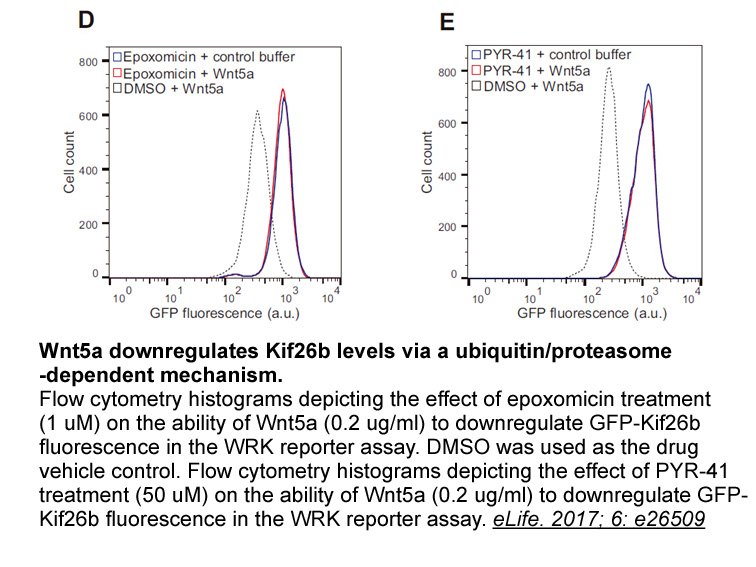
Materials and methods Results Discussion More experiments were performed in order to explain the mechanism that is involved in etomoxir death both PC3 and Hep G2 cells using compound 5. Results showed that this compound inhibits cell viability inducing apoptosis in a concentration-dependen
-
nuciferine synthesis Glucose permeability studies demonstrat
2024-03-19
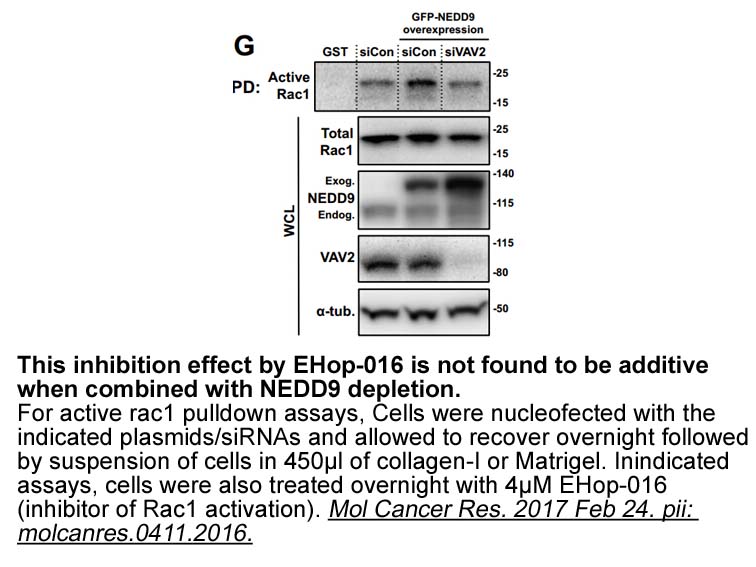
Glucose permeability studies demonstrated a high glucose flux through the SF films used in the present work. Recent diffusion studies, including small molecular drugs and oxygen permeation through SF membranes [32], further support the quality of SF and its possible application as a material for bio
-
Unlike AK inhibition the inhibition of
2024-03-19
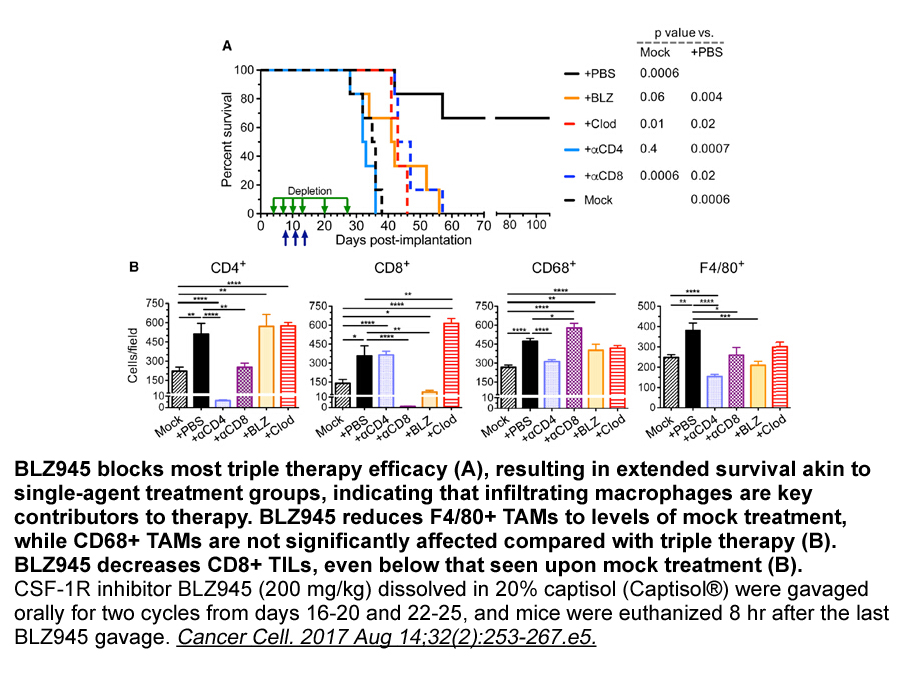
Unlike AK inhibition, the inhibition of ADA activities by EHNA had little effect on spinal reflex potentials, although EHNA did increase extracellular adenosine levels. One explanation for this discrepancy is that the adenosine increase seen herein was not sufficient to inhibit reflex potentials. In
-
Tension within the network could be explained by two potenti
2024-03-19
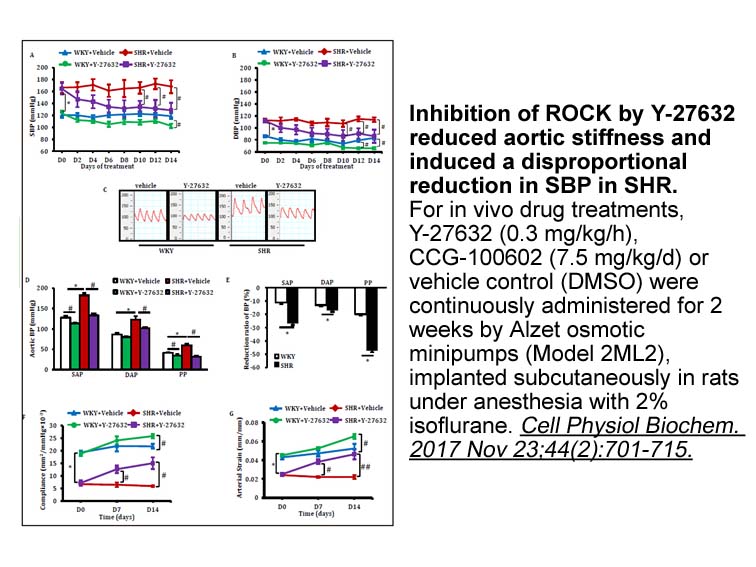
Tension within the network could be explained by two potential mechanisms: the more classical contractility that is dependent on motor proteins that are pulling px express synthesis filaments towards each other [10]; or contractility that is caused by disassembly of a crosslinked network of actin fi
-
In summary we suggest that both
2024-03-19
In summary, we suggest that both cofilin and gelsolin are essential factors that regulate sperm capacitation and the acrosomal exocytosis by modulating actin. The relationships between activation/inactivation of cofilin and gelsolin suggest that inhibition of cofilin is important for allowing F-acti
8367 records 201/558 page Previous Next First page 上5页 201202203204205 下5页 Last page