Archives
- 2026-07
- 2026-06
- 2026-05
- 2026-04
- 2026-03
- 2026-02
- 2026-01
- 2025-12
- 2025-11
- 2025-10
- 2025-09
- 2025-04
- 2025-03
- 2025-02
- 2025-01
- 2024-12
- 2024-11
- 2024-10
- 2024-09
- 2024-08
- 2024-07
- 2024-06
- 2024-05
- 2024-04
- 2024-03
- 2024-02
- 2024-01
- 2023-12
- 2023-11
- 2023-10
- 2023-09
- 2023-08
- 2023-07
- 2023-06
- 2023-05
- 2023-04
- 2023-03
- 2023-02
- 2023-01
- 2022-12
- 2022-11
- 2022-10
- 2022-09
- 2022-08
- 2022-07
- 2022-06
- 2022-05
- 2022-04
- 2022-03
- 2022-02
- 2022-01
- 2021-12
- 2021-11
- 2021-10
- 2021-09
- 2021-08
- 2021-07
- 2021-06
- 2021-05
- 2021-04
- 2021-03
- 2021-02
- 2021-01
- 2020-12
- 2020-11
- 2020-10
- 2020-09
- 2020-08
- 2020-07
- 2020-06
- 2020-05
- 2020-04
- 2020-03
- 2020-02
- 2020-01
- 2019-12
- 2019-11
- 2019-10
- 2019-09
- 2019-08
- 2019-07
- 2019-06
- 2019-05
- 2019-04
- 2018-11
- 2018-10
- 2018-07
-
On the other hand imidazolylcyclopropane derivatives
2022-02-23
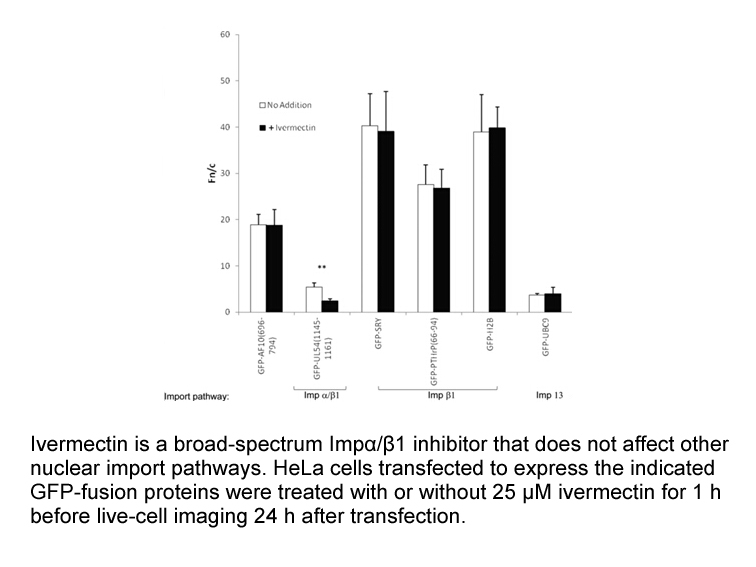
On the other hand, imidazolylcyclopropane derivatives and having a 2-substituted benzimidazolyl group showed moderate binding affinities for both the HR and HR. Replacement of 4-chlororbenzylamino group of with a benzimidazolyl group () led to increase the affinity for the HR more than 5-fold ( = 18
-
The neurotransmitter histamine plays a key role
2022-02-23
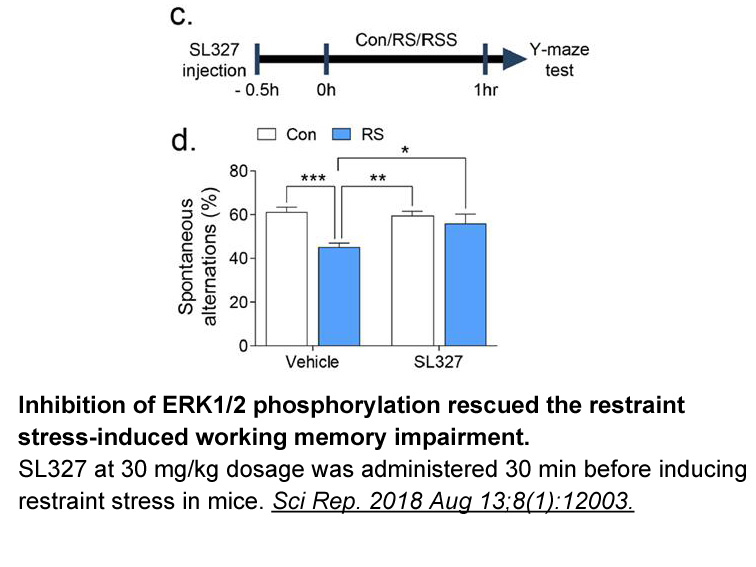
The neurotransmitter histamine plays a key role in the sleep-wake cycle and in learning and memory. Alterations in HBC histamine levels are closely connected with central nervous system dysfunction, and are thought to contribute to neurological disorders, including Alzheimer's disease and depression
-
MAP Ks act at the
2022-02-22
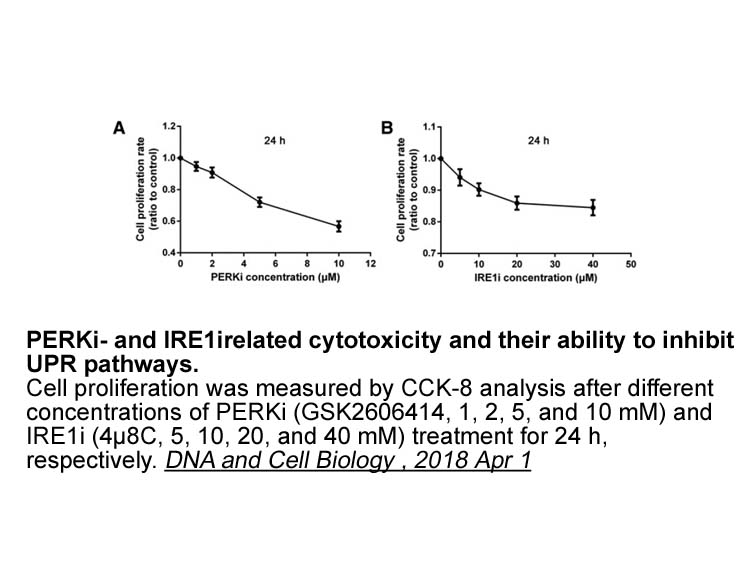
MAP4Ks act at the level of MST1/2 to phosphorylate LATS1/2 and regulate the Hippo pathway (Box 1). Of particular interest is the involvement of MAP4K4, a key metabolic regulator [88] and common polymorphisms in the MAP4K4 locus are associated with T2D and insulin resistance [89] in adipogenesis. In
-
In hypoxic breast cancer cells BNIP mediated autophagy activ
2022-02-22
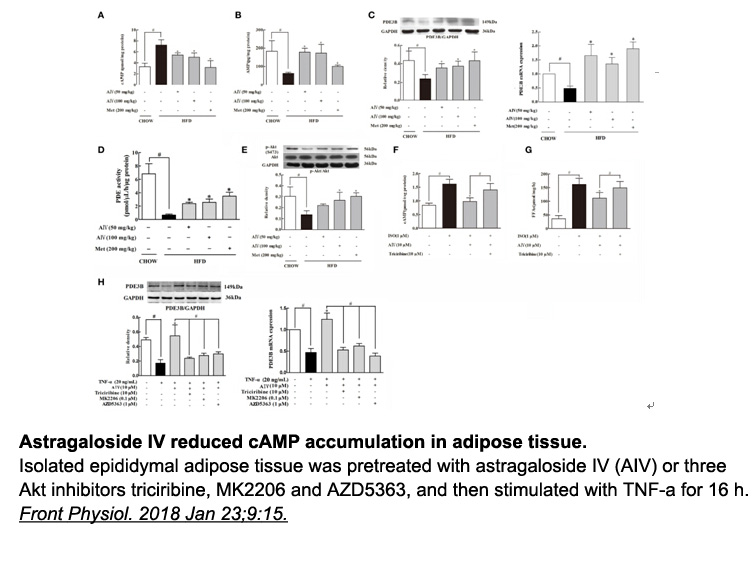
In hypoxic breast cancer cells, BNIP3-mediated autophagy activation and elevation of amino Z-Ligustilide levels were notable. BNIP3, a BCL-2 family protein, is known to be transcriptionally regulated by HIF-1α and to be involved in cancer cell death in hypoxic conditions [51]. As a link to autophag
-
HOs can be found in both plants and
2022-02-22
HOs can be found in both plants and animals and they are evolutionarily conserved proteins [8]. There are two HO isoenzymes: inducible heme oxygenase-1 (HO-1) and constitutive heme oxygenase-2 (HO-2) encoded by different genes [9,10]. Biosynthesis of a stress-inducible HO-1 can be triggered by a var
-
The Scribble complex localizes to the leading
2022-02-22
The Scribble complex localizes to the leading edge in response to integrin engagement. There, Scribble controls the activation Rac and PAK via the Rac GEF β-Pix (Bahri et al., 2010), which is required for collective cell migration (Omelchenko et al., 2014). However, on the rear edge, Scribble can be
-
br Consequence physiological function of ROS dependent inhib
2022-02-22
Consequence/physiological function of ROS-dependent inhibition of GSNOR Plants response to environmental changes induced by abiotic and biotic factors by enhanced accumulation of ROS resulting in temporary imbalance of the cellular redox homeostasis. This as oxidative stress/burst termed event tr
-
br Acknowledgments This research was supported by the
2022-02-22
Acknowledgments This research was supported by the Czech Ministry of Education, Youth and Sports by grants MSM LH11013 and Czech Grant Agency (501/12/0590). David Kopečný and Martina Kopečná were supported by the grant LO1204 from the National Program of Sustainability I by the Ministry of Educat
-
br Materials and methods br Results br
2022-02-22
Materials and methods Results Discussion According to the literature, zaprinast is a high-affinity agonist of GPR35 (Berlinguer-Palmini et al., 2013, Divorty et al., 2015, Taniguchi et al., 2006, Zhao et al., 2010). GPR35 l-ascorbic acid has been identified within discrete regions of the n
-
In addition analysis of the
2022-02-22
In addition, analysis of the functional elements in the GnRH promoter region also identified other transcription factor binding sites, such as those for GATA-1 and Oct-1. However, those sites were not further validated in this study. Nevertheless, it has been reported that transcription factors such
-
br Inclusion exclusion criteria br Quality assessment All st
2022-02-22
Inclusion/exclusion criteria Quality assessment All studies included in the qualitative synthesis were evaluated using the Quality Assessment Tool for Quantitative Studies (QATQS), which allows to determine their methodological quality. QATQS assesses 8 sections: selection bias, study design,
-
pd 0332991 Kern et al observed an overall improvement in beh
2022-02-22
Kern et al observed an overall improvement in behaviors typical for autism during TR. They used the Childhood Autism Rating Score (CARS), to determine the intensity of the change and found lower CARS values after 3 (t(21) = 2.73, p but pd 0332991 comparison of differences in QoL improvement in both
-
Instead our results reveal that
2022-02-22
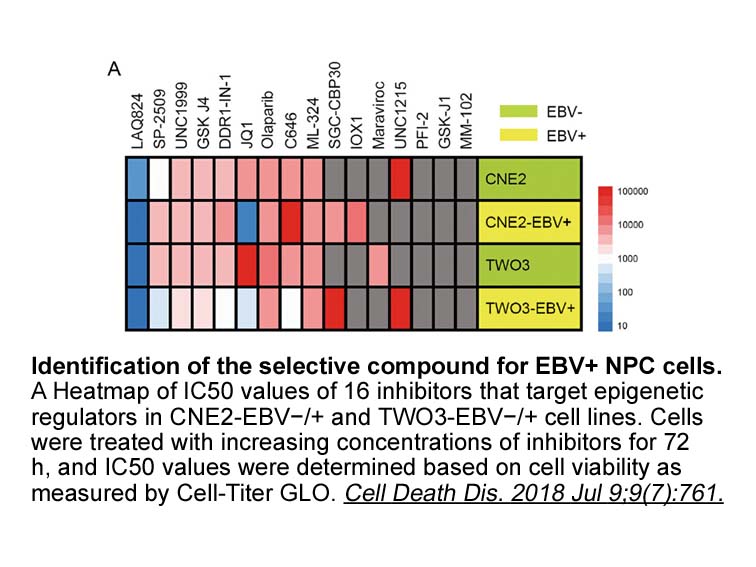
Instead, our results reveal that autophagy controls the membrane association of the cargo-selective SNX-BAR retromer assembly (comprised of the VPS35/29/26 trimer in association with SNX1/2 and SNX5/6), which has been demonstrated to promote GLUT1 surface recycling. Accordingly, GLUT1 localization i
-
br Materials and methods br Results
2022-02-22
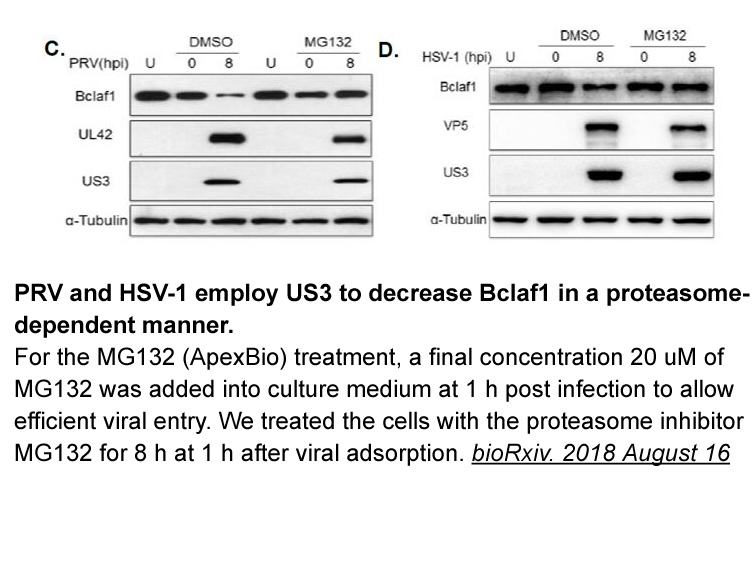
Materials and methods Results Discussion Ghrelin is reported to regulate a number of processes related to cancer progression including tumor cell proliferation, apoptosis and metastasis [3,7,[15], [16], [17], [18], [19], [20], [21], [22]]. In the present study, we examined the potential eff
-
Until recently the mechanism of how GSMs
2022-02-22

Until recently the mechanism of how GSMs shifted γ-secretase cleavage was poorly understood. Today, building on the sequential cleavage model developed by Ihara and colleagues [14], there is evidence that GSMs act as processivity enhancers, and iGSMs as inhibitors of processivity [120]. At least for
16171 records 519/1079 page Previous Next First page 上5页 516517518519520 下5页 Last page